Container Repurposing

Creative IBC Repurposing

Rain barrels, garden planters, compost bins, aquaponics, emergency water storage, and dozens more creative applications for IBC containers.

Free Quote

Request a Quote

Tell us who you are

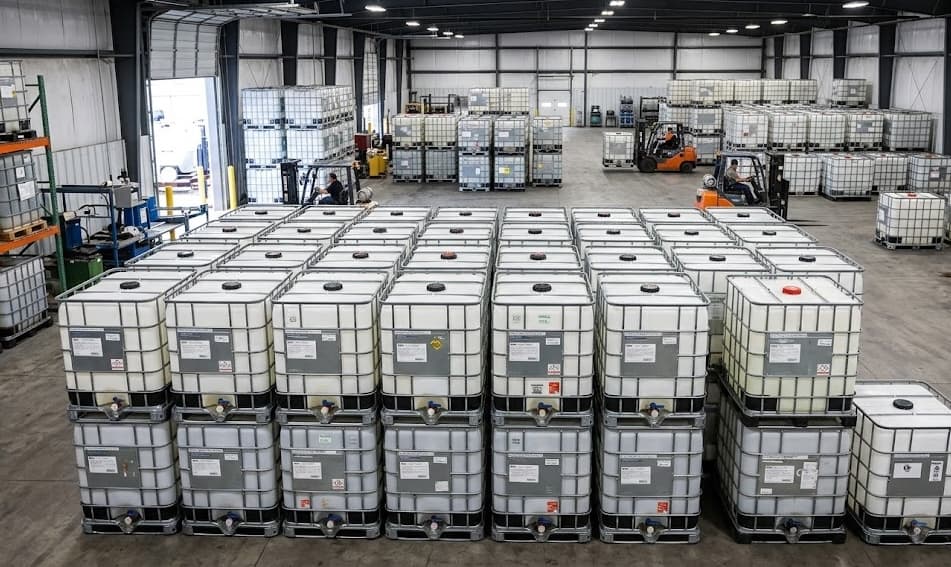
Not every IBC tote needs to spend its second life hauling liquids. The rugged construction of an intermediate bulk container — a thick HDPE bottle cradled in a galvanized steel cage on a sturdy pallet — makes it one of the most versatile building blocks for DIY projects, agricultural setups, homesteading infrastructure, and creative industrial applications. At IBC Cincinnati, we sell cleaned and modified totes specifically prepared for repurposing, and we offer custom fabrication to turn a standard container into exactly the tool you need.

Whether you are a homeowner looking for a high-capacity rain barrel, a farmer building a livestock watering system, or a maker designing an aquaponics setup, our team at 1405 Worldwide Blvd, Hebron, KY 41048 can supply the right container — cleaned, modified, and ready for your project. We also offer guidance on which container grade is appropriate for your intended use, especially when food safety or potable water is involved.

Popular Applications

Creative Ways to Repurpose IBCs

From backyard rain barrels to commercial aquaponics, the possibilities are nearly limitless. Here are the most popular conversions we build.

Rain Barrels & Water Collection

An IBC tote is one of the most efficient rain barrels you can install. With 275 gallons of capacity, a single converted IBC captures more runoff than five standard rain barrels combined. We fit totes with screened inlet filters, spigots at multiple heights, overflow outlets, and optional daisy-chain connectors so you can link multiple containers for whole-property rainwater harvesting.

Garden Planters & Raised Beds

Cut an IBC bottle in half and you have two deep, UV-resistant raised bed planters ready for vegetables, herbs, or ornamental plants. The steel cage provides structural support, and the pallet base keeps everything elevated for improved drainage. We offer pre-cut planters with drainage holes drilled, weed barrier lining, and optional trellis frames welded to the cage.

Compost Bins

The enclosed design of an IBC tote makes it an excellent large-capacity compost system. We modify containers with ventilation ports, access doors on the front panel, and mixing mechanisms. A 275-gallon IBC composter handles the organic waste output of a mid-sized farm, restaurant, or community garden with ease.

Aquaponics & Fish Tanks

IBC totes are a favorite in the aquaponics community for good reason — they are food-safe, durable, and the perfect size for small-scale fish production. We supply cleaned food-grade totes ready for aquaponics setups and offer custom modifications including viewing windows, plumbing ports, and grow-bed inserts cut from the upper portion of the bottle.

Emergency Water Storage

For homesteaders, rural properties, and emergency preparedness, an IBC tote provides reliable bulk water storage. We supply food-grade cleaned containers fitted with sealed caps, UV-protective covers to prevent algae growth, and ball valves for controlled dispensing. Multiple totes can be connected in series for large-volume emergency reserves.

Industrial & Workshop Storage

Repurposed IBCs make excellent storage vessels for non-liquid materials. Workshops use them for bulk storage of sawdust, wood chips, grain, animal feed, sand, gravel, and other dry goods. We can cut access hatches, install hinged lids, add caster wheels for mobility, and reinforce the cage for stacking.

More Inspiration

10 More Creative Repurposing Ideas

Our customers constantly surprise us with innovative uses for IBC totes. Here are ten additional projects we have helped build — from hot tubs to biogas digesters.

Hot Tub & Soaking Pool

One of the most popular DIY IBC projects. The bottle is cut to the desired depth (usually 36–40 inches), the cage provides the structural frame, and a wood-fired or electric water heater supplies warm water. We can pre-cut the bottle, add drain fittings, and reinforce the cage top rail for safe entry and exit. Most builds cost under $500 total with a reconditioned tote as the base.

Chicken Coop & Poultry Shelter

The IBC cage and bottle combination creates a weatherproof, predator-resistant poultry shelter. Cut access doors into the front panel, drill ventilation holes near the top, and the cage keeps the structure rigid while the bottle provides insulated walls. One IBC comfortably houses 4–6 laying hens. Add a roosting bar and nesting box insert for a complete coop.

Dog House & Pet Shelter

A half-cut IBC bottle placed inside its cage frame creates an insulated, elevated dog house suitable for medium-to-large breeds. The HDPE material is easy to clean, impervious to moisture, and retains warmth in winter. We can cut custom doorways, add ventilation, and line the floor with insulating pads.

Worm Farm (Vermicomposting)

Stack two half-cut IBC bottles vertically to create a high-capacity worm farm. The upper section holds bedding and food waste, while the lower section collects nutrient-rich worm tea through drainage holes. A spigot at the bottom allows easy harvesting of liquid fertilizer. One IBC worm farm processes up to 50 lbs of food waste per week.

Outdoor Shower Station

Mount an IBC tote on an elevated platform (or use the pallet as-is) and gravity-feed water through a shower head. Solar heating is achieved by painting the bottle black or wrapping it in dark fabric. Ideal for pool areas, beach houses, campgrounds, and agricultural wash stations. We install the shower fitting, valve, and optional solar heating wrap.

Biogas Digester

An IBC tote can serve as the main digestion chamber in a small-scale biogas system that converts organic waste into methane for cooking or heating. The airtight bottle is ideal for anaerobic digestion, and the cage provides structural support. We can fit gas outlet ports, feeding tubes, and pressure relief valves for a functional home biogas unit.

Firewood Storage Rack

Remove the bottle entirely and use just the steel cage as a firewood storage rack. The cage holds approximately one face cord of split firewood, keeps it elevated off the ground for air circulation, and is stackable for multi-cord storage. Add a tarp or metal roof panel and you have a weather-protected woodshed for under $100.

Mobile Pressure Washer Tank

Mount an IBC on a trailer or truck bed, connect a pump and pressure washer, and you have a mobile wash station with a 275-gallon water supply. Popular with mobile detailers, construction crews, and agricultural operators who need water on remote job sites. We install plumbing fittings, anti-slosh baffles, and pump mounting brackets.

Rainwater-Fed Drip Irrigation

Connect an IBC rain barrel to a gravity-fed drip irrigation system for a self-sustaining garden watering solution. The 275-gallon capacity provides enough water for a 500+ square foot garden for over a week without rain. We install the collection inlet, filtration screen, overflow, and drip-line manifold connections.

Portable Wash Station / Sink

Perfect for job sites, outdoor events, and agricultural settings where running water is unavailable. We modify an IBC with a foot-pump or battery-operated pump, a basic basin, and a gray-water collection drain. The 275-gallon supply lasts for hundreds of hand-washes or equipment rinses between refills.

Safety First

DIY Modification Safety Guidelines

Working with IBC totes is straightforward, but following these safety guidelines will help you avoid common mistakes and ensure a safe, long-lasting project.

Cutting & Fabrication Safety

  • Always wear safety glasses, gloves, and hearing protection when cutting HDPE or steel
  • Use a reciprocating saw or jigsaw with a fine-tooth blade for cutting the HDPE bottle — not an angle grinder, which can melt the plastic
  • When cutting the steel cage, use an angle grinder with a metal cut-off disc or a Sawzall with a bi-metal blade
  • Deburr all cut edges immediately — cut HDPE and steel leave sharp edges that cause injuries
  • Work in a well-ventilated area if using heat tools — HDPE fumes should not be inhaled
  • Never use a torch or open flame to cut or shape HDPE — it is flammable and produces toxic fumes
  • Secure the IBC firmly before cutting; use clamps or have an assistant steady the container

Material Safety & Hygiene

  • ONLY use food-grade IBCs for projects involving potable water, food storage, fish tanks, or any contact with consumables
  • Never repurpose a container that held pesticides, solvents, or unknown chemicals for food/water use — even after cleaning
  • Check the production date stamped on the bottle; HDPE degrades with UV exposure over time
  • If storing water outdoors, use a UV-protective cover or paint to prevent algae growth and plastic degradation
  • For hot water applications (hot tubs, showers), ensure the HDPE will not be exposed to temperatures above 140F (60C) — this is the safe upper limit for standard IBC bottles
  • HDPE is not compatible with strong oxidizers, chlorinated solvents, or aromatic hydrocarbons — do not store these in repurposed totes
  • Flush and rinse any container thoroughly before repurposing, even if it was previously cleaned
DIY Toolkit

Tools Needed for Common IBC Projects

Most IBC repurposing projects can be completed with basic tools you may already own. Here is a breakdown by project type.

Project TypeEssential ToolsOptional / AdvancedSupplies
Rain BarrelDrill, hole saw (2"), adjustable wrenchJigsaw (for overflow cutout)Spigot kit, screen mesh, Teflon tape, overflow fitting
Raised Bed PlanterReciprocating saw, drill, utility knifeAngle grinder (for cage trimming)Landscape fabric, drainage gravel, zip ties
Aquaponics SystemJigsaw, drill, hole saw set, pliersSilicone sealant gun, PVC cutterBulkhead fittings, PVC pipe, pump, grow media
Hot Tub / Soaking PoolReciprocating saw, drill, wrench setAngle grinder, welder (for cage mods)Drain fitting, water heater, insulation, sealant
Compost BinDrill (large bit set), jigsawHinge hardware, latchScrews, ventilation screening, door hinges
Firewood Rack (cage only)Wrench set, bolt cutters (if trimming cage)Angle grinder, spray paintTarp or roofing panel, zip ties or wire

Prefer to skip the DIY? We offer pre-modified IBC totes for many popular projects. Let us do the cutting, drilling, and fitting so you receive a ready-to-use unit. Describe your project and we will quote the modification work.

Regulations

Permit & Regulatory Considerations

Depending on your location and intended use, some IBC repurposing projects may require permits or need to comply with local regulations. Here is what to check before you build.

Rainwater Collection

Most states allow residential rainwater collection, but some regulate volume, storage method, or intended use. Ohio and Kentucky have no restrictions on residential rainwater harvesting. Check your local municipality for any specific ordinances on container placement, setback requirements, or collection limits.

Hot Tubs & Pools

DIY hot tubs and soaking pools may be subject to local building codes, especially regarding electrical connections for heaters and pumps. Many jurisdictions require fencing around permanent water features deeper than 24 inches. Check with your building department before installing a permanent IBC hot tub setup.

Agricultural Water Storage

Farm water storage typically falls under agricultural exemptions for permitting. However, if you are storing pesticide mixing water or connecting to a well or municipal supply, backflow prevention may be required. Consult your county agricultural extension office for local requirements.

Potable Water Storage

If you intend to store drinking water in an IBC, use only new or FDA-compliant reconditioned food-grade totes. Some health departments have requirements for potable water storage containers. Never use a container that previously held chemicals for drinking water, regardless of cleaning.

Structural Installations

Permanent IBC installations (elevated tanks, wall-mounted systems, multi-unit stacks) may require a building permit if they are above a certain height or weight threshold. Any installation that modifies a building structure or its foundation typically requires permit review.

Commercial & Rental Properties

If you are installing IBC-based systems on commercial property or a rental unit, check both your landlord agreement and local zoning ordinances. Some HOAs and zoning codes restrict visible storage containers or rainwater collection systems.

This information is for general guidance only and should not be treated as legal advice. Always check with your local building department, health department, or zoning office before starting a project that involves water storage, structural modifications, or electrical work.

Custom Fabrication

Custom Modifications

Have an idea that does not fit a standard template? Our fabrication shop can handle virtually any modification to an IBC container. Common custom requests include:

  • Cutting access doors and hinged hatches into the bottle or cage
  • Installing additional bulkhead fittings, spigots, and plumbing ports
  • Welding brackets, shelves, or trellis frames to the steel cage
  • Adding caster wheels for mobile applications
  • Painting and powder-coating the cage for weather resistance or aesthetics
  • UV-protective wrapping or covers for outdoor installations
  • Multi-unit manifold connections for linked systems
  • Screened inlets and debris filters for rainwater collection

DIY Project Support

Prefer to do the modifications yourself? We sell cleaned, unmodified totes at our best prices and can share guidance on cutting, plumbing, and finishing techniques for common repurposing projects. Our team has helped hundreds of DIY builders get started with IBC conversions and is happy to answer questions about material compatibility, tool selection, and best practices.

Keep in mind that food-grade containers should always be used for projects involving potable water, food storage, or aquaponics. We clearly label all totes with their previous contents so you can make an informed choice.

Ask Us About Your Project
Farm & Homestead

Agricultural & Homesteading Applications

Farmers and homesteaders across Ohio, Kentucky, and Indiana rely on repurposed IBC totes as affordable, durable infrastructure. The 275-gallon capacity, forklift-compatible pallet base, and chemical-resistant HDPE construction make IBC containers ideal for dozens of agricultural applications. Here are the most common uses we see on farms in our service area:

  • Livestock watering stations with float-valve auto-fill
  • Fertilizer mixing and storage tanks
  • Irrigation reservoirs for drip-line systems
  • Maple syrup collection and holding tanks
  • Hydroponic nutrient reservoirs
  • Grain and feed storage bins (with dry-goods modification)
  • Pesticide mixing stations (with proper containment)
  • Mobile water transport for remote pastures
Sustainability

The Environmental Case for Repurposing

Repurposing extends the useful life of an IBC far beyond its original industrial purpose. Every tote that becomes a rain barrel, planter, or fish tank is one that does not need to be recycled yet — saving the energy, water, and emissions associated with material processing. And when the container eventually reaches the end of its repurposed life, every component remains fully recyclable through our recycling program.

By choosing a repurposed IBC over a new product — a manufactured rain barrel, a store-bought raised bed, a commercial water tank — you avoid the environmental cost of producing that new item entirely. It is one of the simplest and most impactful sustainability choices a homeowner or farmer can make.

We encourage our customers to think creatively. If you have an unconventional idea for how to use an IBC tote, reach out to our team. We love helping people find new applications for these incredibly versatile containers.

Project Stories

What Our Repurposing Customers Say

I bought three food-grade IBCs for a backyard aquaponics system. IBC Cincinnati helped me choose the right grade, pre-cut the grow bed from the top section, and installed all the bulkhead fittings. I just had to connect the plumbing. Six months in and the system is thriving.

Aaron C.

Homesteader & Aquaponics Enthusiast

We converted six IBCs into rain barrels for our community garden. The daisy-chain connector system they installed means one downspout fills all six tanks — over 1,600 gallons of storage total. Our water bill dropped dramatically during the growing season.

Keisha D.

Community Garden Coordinator

Built an IBC hot tub using their pre-cut tote and it was way easier than expected. They cut the bottle to the right height, installed the drain, and even reinforced the cage rim. Total project cost including the tote and a wood-fired heater was under $600.

Liam P.

DIY Builder

Cost Comparison

Repurposed IBC vs. Store-Bought Alternatives

See how a repurposed IBC compares to buying a new commercial product for the same application.

ApplicationRepurposed IBC CostCommercial Product CostCapacity Advantage
Rain Barrel$100–$150 (IBC + fittings)$80–$200 (50-gal barrel)5x the capacity at similar price
Raised Bed Planter$50–$90 (half IBC + soil)$100–$300 (cedar raised bed)Deeper soil volume, UV-resistant
Fish Tank (aquaponics)$120–$200 (food-grade IBC + mods)$300–$800 (aquaponics kit)275-gal tank included
Hot Tub$400–$600 (IBC + heater + fittings)$3,000–$8,000 (inflatable or rigid)80% cost savings
Water Storage (275 gal)$85–$130 (food-grade IBC)$400–$700 (poly water tank)50–70% savings
Compost Bin$80–$120 (IBC + ventilation mods)$150–$400 (tumbler composter)3–4x the volume

These are approximate costs based on typical projects in our service area. Prices for IBC totes vary by grade and condition — visit our buy page for current inventory and pricing.

Common Questions

Frequently Asked Questions

Can I use any IBC for potable water storage?+
No. Only food-grade IBCs — either new or reconditioned using FDA-compliant cleaning — should be used for potable water storage. The previous contents matter significantly. A tote that held industrial chemicals is not safe for drinking water, even after cleaning. When you purchase from us, we clearly label every container with its previous contents so you can make an informed choice. Visit our cleaning page to learn about our food-grade reconditioning process.
How long will a repurposed IBC last outdoors?+
HDPE is highly durable and resistant to rot, insects, and most chemicals. However, prolonged UV exposure causes the plastic to become brittle over time. With a UV-protective cover, paint, or fabric wrap, an IBC tote can last 10–15+ years outdoors. Without UV protection, expect 3–5 years of reliable service in direct sunlight. The galvanized steel cage is naturally weather- resistant and will last decades. We offer UV wraps and cage powder-coating as add-on services.
Do you deliver pre-modified IBCs to my home?+
Yes. We deliver throughout our service area (OH, KY, IN, MI and surrounding states) using our own fleet, including locations without loading docks. Our trucks carry forklifts and liftgates for residential delivery. You can also pick up from our facility at 1405 Worldwide Blvd, Hebron, KY 41048 during business hours. Visit our transportation page for delivery details.
What grade of IBC should I buy for my project?+
It depends on the application. For potable water, food storage, aquaponics, and hot tubs, always use a food-grade IBC (either new or reconditioned to FDA standards). For rain barrels, garden planters, compost bins, and general storage, a Grade B or Grade C used tote is perfectly suitable and much more affordable. Our team can recommend the right grade for your specific project — just tell us what you are building.
Can I return an IBC for recycling when my project is done?+
Yes. When your repurposed IBC reaches the end of its useful life, bring it back to our facility or schedule a pickup. Every component — the HDPE bottle, steel cage, and pallet — is fully recyclable through our recycling program. This closes the loop and ensures nothing ends up in a landfill.
How much does a custom-modified IBC cost?+
The total cost is the price of the tote (starting at $75 for used, $130 for reconditioned) plus modification labor. Simple modifications like adding a spigot or drilling drainage holes typically add $15–$30. More complex work like cutting access doors, welding cage modifications, or installing multi-port plumbing systems ranges from $50–$200+ depending on complexity. We provide a detailed quote before starting any modification work.

Ready to Start Your IBC Project?

Tell us what you are building and we will recommend the right container, grade, and modifications. Custom quotes provided within 24 hours.