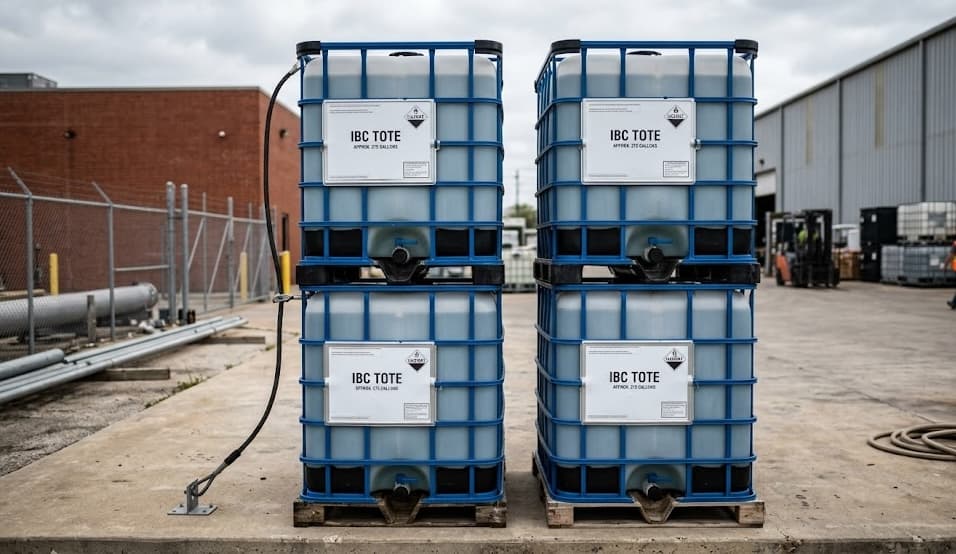
Reconditioned IBC Totes
Our reconditioned IBCs go far beyond a basic rinse. Each container undergoes a documented, multi-stage reconditioning process that restores it to near-new performance at a fraction of the replacement cost.
Why Reconditioned Is Better Than “Just Used”
A used IBC tote is sold essentially as-is after a visual inspection. It may retain residual odors, label adhesive, or trace contamination from its previous service life. A reconditioned IBC, by contrast, has been disassembled to its component parts, cleaned inside and out, mechanically restored, and quality-verified before being reassembled and returned to inventory.
This distinction matters enormously for businesses that need containers meeting hygiene standards, chemical compatibility requirements, or corporate sustainability benchmarks. Reconditioning extends the useful life of an IBC by two to four additional service cycles while eliminating the risk of cross-contamination — giving you the reliability of a new container at 40-60% of the cost.
Restored to Near-New Condition
Our professional reconditioning process goes far beyond a basic rinse. Every container is disassembled, triple-washed, pressure-tested, and fitted with new components before being reassembled and certified.
The Reconditioning Process
Every reconditioned IBC at our Hebron, KY facility goes through these documented stages before it is released to a customer.
Triple-Wash Cleaning
The HDPE bottle is washed three consecutive times using hot water, alkaline detergent, and a final sanitizing rinse. Each wash cycle is temperature-controlled to at least 160 degrees Fahrenheit to break down residual oils, sugars, and chemical films. Wash water is captured and treated before discharge.
Pressure Testing
After cleaning, every bottle is sealed and subjected to a controlled air-pressure test at 2.5 PSI for a sustained period. Technicians monitor for any pressure drop that would indicate micro-cracks, pinhole leaks, or gasket failures. Containers that fail are retired from reconditioning and sent to recycling.
Valve Replacement
The 2-inch butterfly or ball valve is removed regardless of apparent condition and replaced with a brand-new valve and gasket. This eliminates the risk of seal degradation or thread wear that is invisible during a visual inspection. The 6-inch top cap and gasket are also replaced.
Label & Adhesive Removal
All original labels, hazard placards, lot codes, and adhesive residue are completely removed from both the bottle and the cage. This prevents downstream confusion about contents and ensures your own labeling adheres cleanly to a smooth surface.
Cage Inspection & Repair
The galvanized steel cage is straightened, de-rusted where needed, and inspected for weld integrity. Damaged cage bars are replaced. The lifting frame and forklift channels are verified to meet load-bearing specifications for safe stacking and transport.
Final QC & Documentation
A final quality-control check covers every aspect of the reassembled container. Each reconditioned IBC receives a dated certification tag, a unique tracking number, and a reconditioning report that documents previous contents, wash chemistry used, and test results.
Quality Certifications
ISO 9001 Compliant Process
Our reconditioning workflow follows ISO 9001 quality management principles with documented procedures, calibrated equipment, and continuous improvement tracking.
FDA 21 CFR 177 Compliance
Food-grade reconditioned IBCs are processed in accordance with FDA regulations for food-contact containers. We maintain batch records that trace every wash chemical and rinse cycle.
UN/DOT Recertification
Containers originally rated for hazardous material transport can be recertified to UN/DOT standards after reconditioning, restoring their compliance for regulated shipments.
Kosher & Halal Compatible
Our food-grade reconditioning line can produce containers suitable for kosher and halal supply chains when requested, with segregated wash equipment and documented protocols.
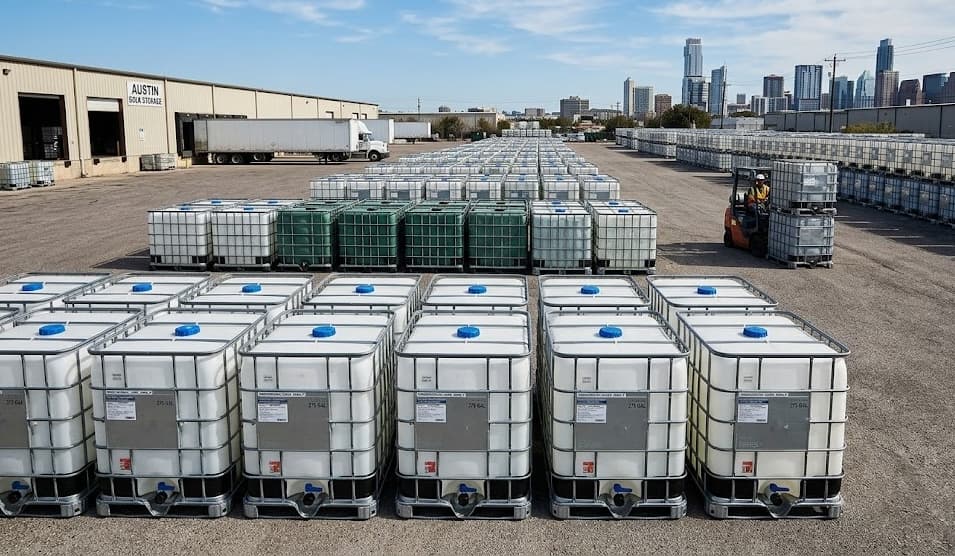
Food-Grade Reconditioning
Our food-grade reconditioning line is physically separated from the industrial wash area to prevent cross-contamination. Only IBCs that previously held food-grade, pharmaceutical, or cosmetic-grade materials are eligible for this process. The wash chemistry uses only FDA-approved detergents and sanitizers, and the final rinse uses filtered, potable water tested to municipal drinking standards.
After reconditioning, food-grade IBCs are stored in a dedicated, climate-controlled staging area with dust covers until shipment. Each unit ships with a Certificate of Reconditioning that includes wash temperatures, chemical concentrations, and microbiological test results upon request.
Warranty & Guarantee
Leak-Free Guarantee
Every reconditioned IBC ships with a 90-day leak-free guarantee. If a container develops a leak under normal use conditions within 90 days of purchase, we will replace it at no charge or issue a full refund — your choice. This guarantee covers the bottle, valve, cap, and all gaskets.
Satisfaction Policy
If a reconditioned IBC does not meet the specifications described at the time of sale, notify us within 14 days. We will arrange a return pickup at our expense and either replace the unit or refund your purchase. We stand behind the quality of our reconditioning work because our reputation depends on it.
Step-by-Step Reconditioning Timeline
From arrival at our facility to shipment, here is the complete journey of a reconditioned IBC and the typical time each stage takes.
Receiving & Intake Sorting
Used IBCs arrive at our Hebron, KY facility. Each unit is logged, photographed, and categorized by previous contents and condition. Containers with hazardous or unknown histories are segregated. Eligible units move to the reconditioning queue.
Disassembly & Component Separation
The IBC is fully disassembled. The HDPE bottle is removed from the steel cage. Valves, caps, and gaskets are discarded. The pallet base is set aside for separate inspection. This separation allows each component to be cleaned and inspected independently.
Triple-Wash Cycle
The bottle goes through three sequential wash stages: a hot alkaline wash at 160°F+ to dissolve organic residue, an acid rinse to remove mineral scale, and a sanitizing final rinse with potable water. Each cycle is temperature- and time-controlled with automated monitoring.
Pressure Testing & Leak Detection
The cleaned bottle is sealed and pressurized to 2.5 PSI. Technicians monitor for pressure drop over a sustained test period. Even a 0.1 PSI drop triggers rejection. Passing bottles proceed to reassembly. Failed units go to recycling.
Cage Repair & Restoration
The steel cage is straightened, de-rusted with mechanical abrasion or chemical treatment, and inspected for weld integrity. Damaged bars are replaced. The lifting frame and forklift channels are load-tested. Cages that cannot be economically restored are scrapped.
Reassembly with New Components
A brand-new 2-inch valve, 6-inch cap, and fresh gaskets are installed. The bottle is placed back into the restored cage on the inspected pallet. All original labels and adhesive are confirmed removed. The reassembled IBC looks and functions like a near-new unit.
Final QC, Certification & Staging
A quality control inspector verifies every aspect of the finished container. The IBC receives a dated certification tag, tracking number, and reconditioning report. Food-grade units are fitted with tamper-evident dust covers and staged in the clean storage area until shipment.
Quality Comparison: Before & After
See exactly what changes during the reconditioning process. Every component is addressed.
Did You Know?
Reconditioning an IBC tote uses approximately 85% less energy and produces 75% fewer carbon emissions compared to manufacturing a new container from virgin materials. By choosing reconditioned, you are not only saving money — you are making a measurably more sustainable choice that keeps functional containers out of the waste stream.
Reconditioning vs. Buying New: Cost Analysis
The financial case for reconditioned IBCs is compelling. Here is a side-by-side comparison based on typical market pricing for 275-gallon HDPE IBCs.
When Reconditioned Makes Sense
- - Budget-conscious operations that need reliable containers
- - Applications where documented cleanliness matters but first-use is not required
- - Companies with sustainability goals and ESG reporting requirements
- - High-volume operations where per-unit cost savings compound quickly
- - Seasonal or project-based needs where containers will not be used for decades
When New Is the Better Choice
- - Regulatory mandates requiring first-use-only containers
- - Pharmaceutical manufacturing with cGMP packaging requirements
- - Hazmat transport needing original UN/DOT marks intact
- - Long-term branded dispensing programs where appearance is critical
- - Ultra-sensitive chemical processes where zero prior exposure is essential
Detailed Warranty Coverage
90-Day Leak-Free Guarantee
Every reconditioned IBC is covered for 90 days against leaks from the bottle, valve, cap, and all gaskets under normal storage and dispensing conditions. If a leak develops, we replace the unit or issue a full refund.
- - Covers bottle seams and welds
- - Covers new valve and cap assemblies
- - Covers all replacement gaskets
- - Does not cover damage from incompatible chemicals
14-Day Satisfaction Guarantee
If the IBC does not match the specifications described at the time of sale, notify us within 14 days. We arrange return pickup at our expense and replace or refund.
- - Covers condition discrepancies
- - Covers incorrect size or configuration
- - Return shipping at our expense
- - Full refund or replacement — your choice
Extended Coverage Options
For fleet customers or long-term storage applications, we offer extended warranty programs beyond the standard 90 days. Ask about our 6-month and 12-month coverage plans.
- - 6-month extended leak coverage available
- - 12-month plan for fleet customers (10+ units)
- - Priority replacement shipping
- - Dedicated account manager for claims
Explore Related Products & Resources
Used IBC Totes
Budget-friendly as-is containers, graded and inspected
Food-Grade IBCs
FDA-compliant for food, beverage, and pharma
New IBC Tanks
Zero-history HDPE and stainless steel options
Replacement Parts
Valves, gaskets, caps, and heating blankets
275-Gallon IBCs
Standard size specs and applications
330-Gallon IBCs
Maximum volume per pallet position
Custom Solutions
Modified containers and integrated systems
IBC Knowledge Base
Guides, tips, and industry articles
Frequently Asked Questions
How is a reconditioned IBC different from a used IBC?
Can reconditioned IBCs be used for food-grade applications?
What does the 90-day leak-free guarantee cover?
How long does the reconditioning process take?
Can you recondition IBCs that I already own?
Are reconditioned IBCs UN/DOT certified for hazmat transport?
Ready to Order Reconditioned IBCs?
Contact our team at 1405 Worldwide Blvd, Hebron, KY 41048 for volume pricing, food-grade availability, and delivery scheduling.