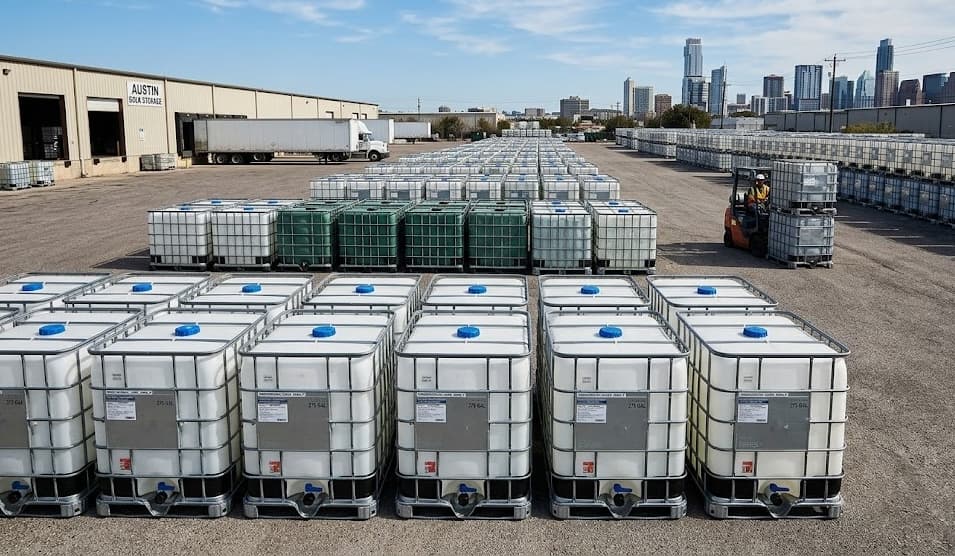
Used IBC Totes for Sale
Cost-effective intermediate bulk containers that have been thoroughly inspected, graded, and cleared for immediate reuse. Every used IBC tote we sell passes a multi-point quality check at our Hebron, Kentucky facility before it leaves our yard.
What Are Used IBC Totes?
A used IBC tote is an intermediate bulk container that has completed at least one service cycle with a prior owner. These containers — typically constructed from a high-density polyethylene (HDPE) inner bottle housed inside a galvanized steel cage and mounted on a pallet base — were originally manufactured for transporting liquids, pastes, or granular materials in volumes of 275 or 330 gallons. Once emptied by their first user, they still retain years of functional life when properly inspected and handled.
At IBC Cincinnati, we source used totes from a wide network of food processors, chemical manufacturers, pharmaceutical companies, and agricultural operations across the Midwest. Each container is cataloged by its previous contents, manufacture date, and overall condition before being offered for resale. This level of traceability lets our customers make informed purchasing decisions based on their specific application requirements.
Inspected, Graded, Ready to Ship
Every used IBC in our inventory passes a rigorous multi-point inspection. We grade each container transparently so you know exactly what you are getting before it leaves our facility.
Our Grading System
We grade every used IBC tote on a standardized A/B/C scale so you know exactly what you are getting. No surprises, no guesswork.
Grade A
The highest quality used tote available. The HDPE bottle is clean, clear or lightly tinted, with no cracks, warps, or staining. The steel cage is straight, rust-free, and fully intact. The valve and cap seal properly. Previously held food-grade or low-risk liquids only. Ideal for food-adjacent storage, potable water collection, and clean chemical transfer.
Grade B
A solid working container with minor cosmetic imperfections. The bottle may show light discoloration or residual labeling. The cage could have minor surface rust or a small dent that does not affect structural integrity. Valves function correctly. Great value for non-food industrial use, agricultural irrigation, and general liquid storage.
Grade C
Economy-tier totes suitable for non-critical applications. The bottle may be noticeably stained or yellowed. The cage might have moderate dents or rust. Valves may need replacement. Priced at the lowest tier, these are popular for rainwater harvesting, construction site use, and non-potable fluid storage.
Our Inspection Process
Every used IBC that arrives at our 1405 Worldwide Blvd facility in Hebron, KY goes through a rigorous multi-point inspection before it is cleared for resale.
Visual Exterior Check
We examine the steel cage for structural damage, rust depth, and weld integrity. Bent or broken cage bars disqualify the unit from Grade A.
Bottle Integrity Test
The HDPE inner bottle is checked for cracks, UV degradation, warping, and chemical staining. We use strong backlighting to detect hairline fractures.
Valve & Cap Assessment
The 2-inch bottom valve and 6-inch top cap are tested for seal integrity. Faulty gaskets or cracked threads result in immediate replacement.
Previous Contents Review
We verify manifests and labeling to identify what the IBC previously held. Containers that stored hazardous or incompatible materials are flagged and routed accordingly.
Pallet Condition
The wood, plastic, or steel pallet base is inspected for rot, cracks, and forklift damage. A weak pallet compromises the entire unit.
Grade Assignment & Tagging
After all checks, each IBC receives a grade (A, B, or C), a dated inspection tag, and entry into our inventory system for full traceability.
Common Previous Contents
Understanding what was previously stored in a used IBC is critical for choosing the right container for your application. Here are the most common categories we see:
Pricing Tiers & Available Sizes
Pricing varies based on grade, size, and order volume. We offer aggressive discounts on bulk purchases of 10 or more units. Contact us for a custom quote tailored to your needs.
275-Gallon IBC Totes
The standard size for most industrial and commercial applications. Fits a standard pallet footprint (48" x 40") and is compatible with virtually all IBC handling equipment. Available in Grades A, B, and C.
View 275-gallon details →330-Gallon IBC Totes
The larger-volume option that maximizes payload per pallet position. Popular in chemical distribution, agricultural supply, and large-scale manufacturing. Available in Grades A, B, and C.
View 330-gallon details →Cage & Bottle Condition Summary
Cage Conditions
- - Fully intact galvanized steel with no rust (Grade A)
- - Light surface oxidation, minor dents (Grade B)
- - Moderate rust, visible dents, functional structure (Grade C)
- - All cages load-tested to ensure forklift and stacking safety
Bottle Conditions
- - Clear/translucent HDPE, no staining or odor (Grade A)
- - Light yellowing, minor label residue (Grade B)
- - Noticeable discoloration, suitable for non-sensitive applications (Grade C)
- - All bottles free of cracks, punctures, and structural compromise
Complete 12-Point Inspection Checklist
Before any used IBC tote leaves our yard, it must pass every item on this comprehensive checklist. This is the exact protocol our inspection team follows at our Hebron, KY facility.
Cage Structural Integrity
Full visual and hands-on check for bent bars, broken welds, and compromised corner posts. Load-bearing capacity verified for safe stacking.
Rust & Corrosion Depth
Surface oxidation measured with a depth gauge. Anything beyond surface-level rust on Grade A disqualifies the unit. Grade B allows light surface rust. Grade C allows moderate oxidation.
HDPE Bottle Clarity
Backlit inspection with high-intensity light to detect internal staining, yellowing, UV degradation, and opacity changes that indicate chemical exposure.
Crack & Fracture Detection
Every bottle is inspected for hairline cracks, stress fractures, and impact damage. We use transillumination and flex testing on suspect areas.
Valve Threading & Seal
The 2-inch bottom valve is hand-tested for smooth thread engagement, quarter-turn operation, and drip-free closure under gravity pressure.
Cap Gasket Compression
The 6-inch top cap gasket is checked for compression set, cracking, and chemical degradation. A failing gasket means a failing seal.
Pallet Base Condition
Wood pallets checked for rot, splitting, and nail protrusion. Plastic and steel pallets checked for cracks and deformation. Forklift channels verified for clearance.
Residual Odor Test
Each bottle is opened and smelled by a trained inspector. Any residual odor is documented and factored into the grade assignment and recommended application.
Previous Contents Verification
Original labels, manifests, and markings cross-referenced against our database. IBCs with unknown or hazardous histories are segregated immediately.
UV Degradation Assessment
Bottle walls tested for brittleness and chalking that indicate prolonged sun exposure. UV-degraded containers are downgraded or removed from inventory.
Manufacture Date Check
The original manufacture date stamp on the bottle is verified. IBCs older than 7 years are flagged for additional scrutiny, and containers older than 10 years are typically retired.
Final Grade Assignment
After all 11 prior checks, the inspector assigns a grade (A, B, or C), attaches a dated inspection tag, and enters the IBC into our inventory tracking system.
Shelf Life Expectations & Storage Best Practices
How Long Do Used IBCs Last?
A properly inspected used IBC tote has significant service life remaining. Under normal storage conditions, HDPE bottles retain their structural properties for 5-7 years from the original manufacture date. A Grade A used tote purchased from IBC Cincinnati typically has 3-5 years of functional life remaining, depending on storage environment and the product being stored.
Exposure to direct UV sunlight is the single biggest factor that reduces HDPE lifespan. Storing IBCs indoors or under cover can extend useful life by 2-3 additional years compared to permanent outdoor exposure. Chemical compatibility is the other key factor — aggressive solvents and strong acids will degrade HDPE faster than water or food-grade liquids.
Storage Best Practices
- 1. Store on level, paved, or compacted surfaces — never on bare soil
- 2. Keep out of direct sunlight whenever possible to slow UV degradation
- 3. Never stack more than 2 loaded IBCs high without manufacturer approval
- 4. Close and secure the top cap and bottom valve when not in use
- 5. In freezing climates, drain IBCs or use heating blankets to prevent ice expansion damage
- 6. Inspect valves and gaskets quarterly if the IBC is in long-term storage
- 7. Store empty IBCs with caps loosely placed (not sealed) to allow air circulation and prevent mold
- 8. Keep IBCs at least 12 inches from walls and heating elements for ventilation and fire safety
Did You Know?
A single used IBC tote replaces approximately five 55-gallon drums, cutting your container handling labor by up to 80% and freeing significant floor space. On a per-gallon basis, IBCs cost 30-50% less than equivalent drum capacity while being far easier to fill, dispense from, and transport with a standard forklift.
Industry-Specific Use Cases
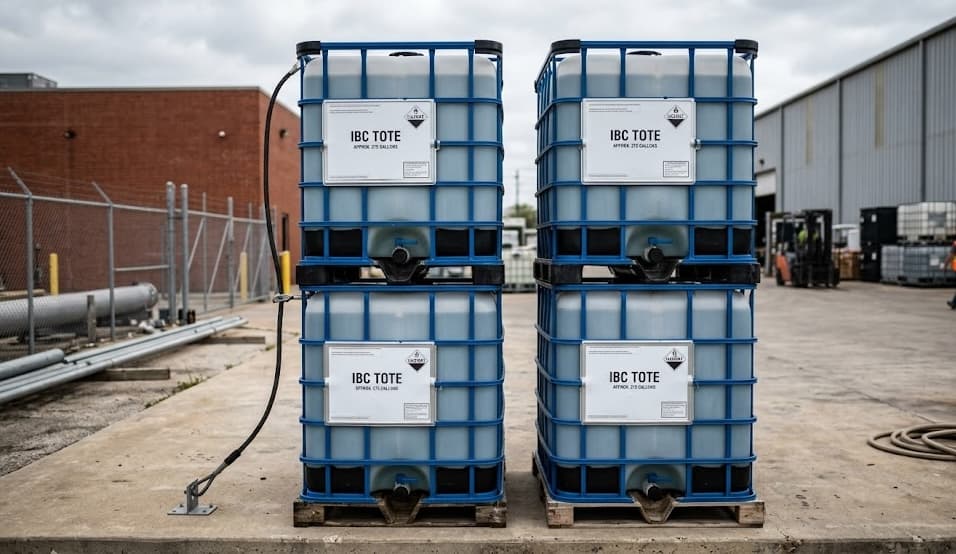
Used IBC totes serve an incredibly diverse range of industries. Here is how different sectors put our graded, inspected containers to work.
Agriculture
Fertilizer storage, pesticide mixing, irrigation water reserves, livestock watering systems, and liquid feed supplement distribution. Grade B and C totes are the most popular for cost-sensitive farm operations.
Food & Beverage
Ingredient storage for oils, syrups, juice concentrates, and flavorings. Grade A totes with verified food-grade previous contents are required. Pairs with our food-grade reconditioning service.
Chemical Manufacturing
Raw material receiving, intermediate storage, and finished product packaging for detergents, solvents, adhesives, and coatings. Chemical compatibility with previous contents must be verified.
Construction
On-site water storage for dust suppression, concrete mixing, and equipment washdown. Grade C totes are ideal — durable enough for rough site conditions and priced for disposable-budget applications.
Automotive & Metalworking
Coolant and cutting fluid storage, waste oil collection, parts washing fluid supply, and antifreeze distribution. Grade B totes balance cost and condition for shop environments.
Cannabis & Hemp
Nutrient solution mixing and delivery, extraction solvent storage, and irrigation system supply tanks. Food-grade containers recommended for anything touching the end product.
Residential & Homesteading
Rainwater collection, garden irrigation, emergency water storage, and aquaponics systems. Grade A and B totes with food-grade histories are the most popular for home use.
Pharmaceutical & Cosmetic
Excipient storage, purified water systems, cream and lotion base ingredients, and fragrance oil supply. Grade A with verified pharmaceutical or cosmetic-grade previous contents only.
HDPE Compatibility Reference Chart
HDPE is compatible with a wide range of substances, but not all. This chart provides general guidance. Always verify specific chemical compatibility before filling a used IBC with a new product.
Did You Know?
HDPE is the same plastic used in milk jugs and food storage containers. It is one of the most chemically resistant plastics available, which is why it was chosen as the standard material for IBC bottles. However, HDPE is permeable to certain solvents and hydrocarbons — meaning these chemicals can actually absorb into the plastic and later leach out. This is why previous contents matter so much when selecting a used IBC for a new application.
Explore Related Products & Resources
Reconditioned IBCs
Higher quality than used, lower cost than new
Food-Grade IBCs
FDA-compliant containers for food and beverage
IBC Accessories
Valves, gaskets, adapters, and heating blankets
Custom Solutions
Modified containers and IBC-based systems
New IBC Tanks
Zero-history HDPE and stainless steel containers
275-Gallon IBCs
Standard size — fits all pallet infrastructure
330-Gallon IBCs
Maximum volume per pallet position
IBC Knowledge Base
Guides, tips, and industry insights
Frequently Asked Questions
Are used IBC totes safe for storing drinking water?
How do I know what was previously stored in a used IBC?
Can I pick up used IBC totes directly from your facility?
What is the difference between Grade A, Grade B, and Grade C?
Do you offer delivery for used IBC totes?
Can I return or exchange a used IBC tote?
How many used IBCs fit on a truck?
Need a Custom Quote?
Visit us at 1405 Worldwide Blvd, Hebron, KY 41048 to inspect totes in person, or contact us for volume pricing and delivery options across the Midwest.