Cleaning & Reconditioning

Professional IBC Cleaning & Reconditioning

A properly cleaned and reconditioned IBC tote performs as reliably as a new one — at a fraction of the cost and with a dramatically smaller environmental footprint.

Free Quote

Request a Quote

Tell us who you are

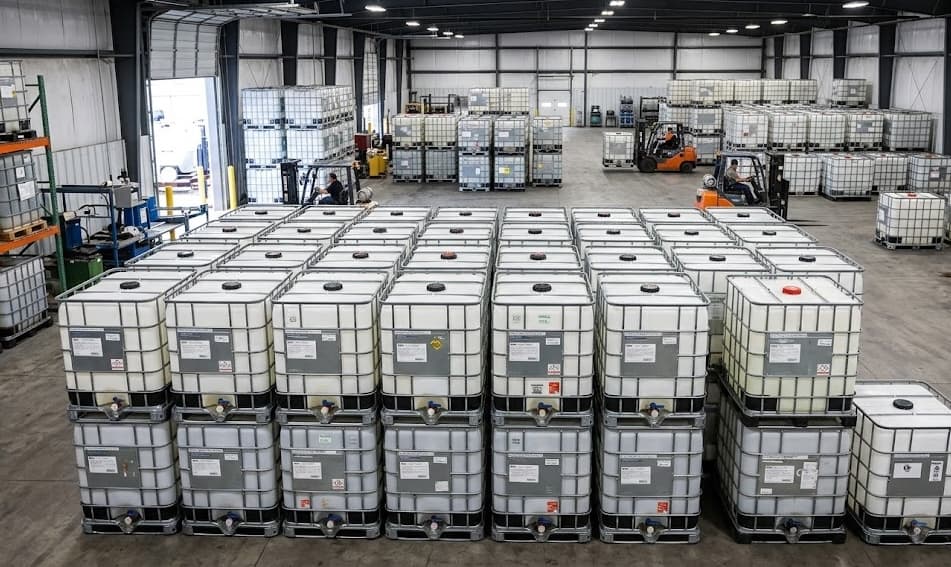
IBC totes being professionally cleaned and reconditioned

A properly cleaned and reconditioned IBC tote performs as reliably as a new one — at a fraction of the cost and with a dramatically smaller environmental footprint. At IBC Cincinnati, our reconditioning facility at 1405 Worldwide Blvd, Hebron, KY 41048 is equipped with industrial wash stations, pressure-testing rigs, and a full mechanical shop to restore containers to like-new condition.

Whether you need food-grade sanitization for a beverage company, chemical decontamination for an industrial distributor, or basic cleaning for agricultural storage, our team tailors the reconditioning process to your specific requirements. We handle everything from simple wash- and-return jobs to complete overhauls including rebottling, cage repair, valve replacement, and label removal.

Core Services

Cleaning & Testing Standards

Triple-Wash Cleaning

Our signature three-stage wash cycle begins with a high-pressure hot water rinse to remove bulk residue, followed by a detergent wash using industry-approved surfactants, and concludes with a final sanitizing rinse. The result is a container that meets or exceeds industry cleanliness standards for reuse.

FDA-Compliant Food-Grade Cleaning

For food and beverage applications, we use FDA 21 CFR 177.1520 compliant cleaning agents and follow HACCP-aligned protocols. Each food-grade tote receives an additional antimicrobial rinse and is dried in a controlled environment to prevent contamination. Documentation of the cleaning process is provided for your records.

Chemical & Hazmat Decontamination

Containers that previously held industrial chemicals, solvents, pesticides, or other regulated substances undergo specialized neutralization and cleaning procedures. We test residual contamination levels and only clear a tote for reuse when it meets safety thresholds specified by EPA and DOT guidelines.

Pressure Testing

Every reconditioned IBC undergoes hydrostatic pressure testing to verify that the bottle, valve, and gasket assembly can withstand operating pressures without leaking. Units that fail pressure testing are diverted to our recycling program — we never release a tote that cannot perform reliably.

Valve & Gasket Replacement

We replace worn, damaged, or contaminated butterfly valves, ball valves, and cam-lock fittings with new OEM-equivalent components. All gaskets are replaced with fresh EPDM or PTFE seals to ensure a leak-free connection. Custom valve configurations are available on request.

Cage Repair & Straightening

Bent, dented, or corroded steel cages are repaired using hydraulic straightening presses and, where necessary, welding. We also address rust with wire brushing and anti-corrosion treatment. Cages that are structurally compromised beyond repair are replaced entirely.

Chemical Compatibility

Cleaning Agent Compatibility Guide

Different residues require different cleaning approaches. Our team selects the optimal cleaning agents based on what was previously stored in the container. Here is a reference guide showing common residue types and the cleaning chemistry we use.

Previous ContentsCleaning AgentMethodNotes
Food-grade liquids (juice, syrup, oil)FDA-approved alkaline detergentTriple-wash + antimicrobial rinseHACCP-aligned process; documentation provided
Water-soluble chemicals (soaps, surfactants)Hot water + non-ionic surfactantTriple-wash cycleStandard process; most cost-effective
Solvents & petroleum productsHydrocarbon-compatible degreaserSolvent pre-rinse + triple-washRinse water captured for proper disposal
Acids (sulfuric, hydrochloric, phosphoric)Alkaline neutralizer + water rinseNeutralization + triple-washpH tested after each stage
Bases / caustics (NaOH, KOH)Acidic neutralizer + water rinseNeutralization + triple-washpH tested after each stage
Paints, resins, adhesivesSpecialized solvent washSolvent soak + mechanical agitationExtended turnaround; may require rebottling
Pesticides / herbicidesEPA-approved decontaminantFIFRA triple-rinse protocolCertified decontamination documentation
Pharmaceutical ingredientsValidated cleaning agentsMulti-stage validated washGMP-compatible; residue testing available

Not sure which cleaning method your containers need? Send us the SDS (Safety Data Sheet) for the previous contents and we will recommend the appropriate protocol. We also handle containers with unknown previous contents using our broadest-spectrum decontamination process.

Service Tiers

Cleaning Levels & Pricing Guide

We offer four tiers of cleaning service, each designed for specific use cases and budgets. All pricing is per unit and decreases with volume.

Level 1

Basic Rinse

From $15/unit

  • Single high-pressure hot water rinse
  • Drain and air dry
  • Visual inspection for defects
  • Cap secured for storage

Best for: Non-critical storage, waste collection, agricultural water

Level 2

Standard Triple-Wash

From $30/unit

  • Three-stage wash cycle
  • Detergent wash + sanitizing rinse
  • Pressure test
  • Label removal
  • New gasket if needed

Best for: General industrial reuse, chemical storage, general manufacturing

Level 3

FDA Food-Grade

From $50/unit

  • FDA-compliant cleaning agents
  • Antimicrobial rinse stage
  • Controlled drying environment
  • New valve and gasket
  • Cleaning documentation
  • Residue testing available

Best for: Food & beverage, cosmetics, nutraceuticals

Level 4

Hazmat Decontamination

From $75/unit

  • Chemical-specific neutralization
  • Multi-stage decontamination
  • Residual contamination testing
  • Wastewater capture & treatment
  • Certificate of Decontamination
  • Full chain-of-custody docs

Best for: Chemical, pharmaceutical, pesticide, petroleum containers

Volume discounts: 10-49 units (5% off), 50-99 units (10% off), 100+ units (15-20% off). Additional services such as rebottling, cage repair, and pallet replacement are quoted separately. Contact us for a custom quote tailored to your specific containers and requirements.

Additional Services

Complete Reconditioning

Rebottling

When an IBC cage is in excellent condition but the inner bottle is cracked, stained, or warped beyond cleaning, we install a brand-new HDPE bottle into the existing cage and pallet assembly. Rebottling gives the container a second full lifecycle at a fraction of the cost of a new IBC.

Label Removal & De-Identification

All previous labels, stickers, stenciling, and barcodes are completely removed during reconditioning. For companies with brand-protection requirements, we provide a certificate confirming that all identifying marks have been eliminated.

Pallet Repair or Replacement

Cracked or broken wood pallets are repaired with kiln-dried replacement boards, or swapped entirely for new wood or plastic pallets depending on your application requirements.

Turnaround Matrix

Turnaround Times by Service & Volume

Turnaround depends on the service level and the number of units. Here is a detailed matrix to help you plan your timelines.

Service1–10 Units11–50 Units51–100 Units100+ Units
Basic Rinse (Level 1)1 day1–2 days2–3 days3–5 days
Standard Triple-Wash (Level 2)2–3 days3–5 days5–7 days7–10 days
FDA Food-Grade (Level 3)3–5 days5–7 days7–10 days10–14 days
Hazmat Decontamination (Level 4)3–5 days5–7 days7–10 days10–14 days
Full Reconditioning (with repairs)5–7 days7–10 days10–14 days14–21 days
Rebottling Service5–10 days10–14 days14–21 daysCustom schedule

Rush service (50% faster turnaround) is available for an additional 25% surcharge. Contact us for expedited turnaround options. All timelines begin when containers arrive at our facility.

Quality Assurance

Certification & Quality Verification Process

Every reconditioned IBC goes through our comprehensive quality verification before being cleared for reuse. Here is the full certification pipeline.

1

Pre-Clean Inspection

Before cleaning begins, each container is photographed and assessed for structural defects, cracks, and contamination level. This determines the cleaning protocol and any repairs needed.

2

Cleaning Execution

The appropriate cleaning protocol is executed per the chemical compatibility guide. Water temperature, detergent concentration, contact time, and rinse volume are all controlled and logged.

3

Residue Testing

For food-grade and hazmat containers, we perform residue testing using swab samples or rinse-water analysis. Containers must fall below established thresholds for the target application before proceeding.

4

Pressure Test

Hydrostatic pressure testing at 1.5x the rated operating pressure verifies that the bottle, valve, and gasket assembly is leak-free. Failed units are diverted to recycling.

5

Mechanical Inspection

Valve operation, gasket seal integrity, cage structural soundness, and pallet load-bearing capacity are all verified. Components that do not meet specifications are replaced.

6

Documentation & Release

A cleaning certificate is generated documenting the process used, test results, and final quality assessment. The container is marked with a reconditioning date and released to inventory or returned to the customer.

Quality Metrics

Before & After Quality Standards

Here is what our reconditioning process achieves across key quality metrics. These standards apply to our Level 2 (Standard Triple-Wash) and above.

Quality MetricBefore ReconditioningAfter Reconditioning
Interior CleanlinessResidue, odor, discolorationVisually clean, odor-free, clear rinse water
Valve FunctionMay be stiff, leaking, or missingSmooth operation, zero-leak seal, new gasket
Pressure IntegrityUnknown — may have micro-cracksPasses 1.5x rated pressure test
Cage StraightnessDents, bends, minor corrosionStraightened to within 5mm tolerance, rust treated
Label/BrandingPrevious labels, stenciling, barcodesFully removed — clean surface
Pallet ConditionCracks, loose boards, missing blocksRepaired or replaced — rated for full load
Residual ContaminationPresent at detectable levelsBelow application-specific thresholds
Overall GradeC or D (fair/poor)A or B (like-new/good)

Photographic before/after documentation is available for every container upon request. This is included by default for food-grade and hazmat reconditioning orders.

Reconditioning Standards

Our reconditioning program follows a rigorous quality-control checklist. Every container is evaluated against 25+ inspection points before it is cleared for reuse. We document the entire process so you have a complete service record for each unit.

  • Visual inspection for cracks, UV degradation, and warping
  • Hydrostatic pressure test at 1.5x rated operating pressure
  • Valve flow-rate testing and leak verification
  • Cage structural integrity assessment
  • Pallet load-bearing capacity check
  • Residual contamination testing (for food-grade and chemical totes)
  • Photographic before/after documentation

Standard Turnaround Times

We understand that downtime costs money. Our reconditioning team works efficiently to return your containers as quickly as possible without cutting corners on quality.

Standard Wash & Inspect1–2 business days
Triple-Wash Reconditioning2–3 business days
FDA Food-Grade Cleaning3–5 business days
Chemical Decontamination3–5 business days
Full Reconditioning (with repairs)5–7 business days
Rebottling Service5–10 business days

Rush service available for an additional fee. Contact us for expedited turnaround options.

Client Feedback

What Our Cleaning Clients Say

We send 40 totes per month to IBC Cincinnati for food-grade reconditioning. The consistency is remarkable — every single container comes back clean, pressure-tested, and with new valves. Their documentation has passed every audit we have had.

Liam P.

Quality Manager, Beverage Manufacturer

Compared to buying new IBCs, reconditioning saves us over $100 per container. The Level 2 triple-wash is all we need for our chemical distribution operation, and the turnaround is fast enough to keep our supply chain flowing.

Marco S.

Operations Manager, Chemical Distributor

IBC Cincinnati handled the decontamination of 200 pesticide containers for our agricultural co-op. The FIFRA-compliant documentation was thorough, and we received Certificates of Decontamination for every batch. Outstanding service.

Tamara H.

Compliance Director, Agricultural Cooperative

How the Process Works

Send us your dirty or damaged IBCs and we will return them ready for service.

01

Drop Off or Schedule Pickup

Bring your totes to our facility or arrange a pickup through our transportation team.

02

Assessment & Quote

We inspect each container and provide a detailed quote for the required cleaning and repair work.

03

Clean & Recondition

Our team performs the agreed-upon services, from basic washing to full-scale reconditioning.

04

QC & Return

Every unit passes quality control before being returned to you with full documentation.

Cost Comparison

Reconditioning vs. Buying New

FactorReconditioned IBCNew IBC
Total Cost (per unit)$30–$75 cleaning + used tote cost$225–$350
QualityPressure-tested, new valves, documentedFactory-fresh, UN-rated
Environmental ImpactLow — extends existing container lifeHigh — new materials and manufacturing
Lead Time1–10 business days2–6 weeks (manufacturer dependent)
Food-Grade CertificationAvailable with FDA-compliant cleaningIncluded
Best ForCost-conscious buyers, sustainability-focused operationsStrict compliance, pharma, first-use certification required

For many applications, a reconditioned IBC delivers identical performance at 40–60% less cost. Need help deciding? Browse our buy page for current inventory, or contact us for a personalized recommendation.

Common Questions

Frequently Asked Questions

Can you clean IBCs that held unknown substances?+
Yes. When previous contents are unknown, we use our broadest-spectrum decontamination protocol, which includes chemical neutralization, triple-wash with industrial surfactants, and residue testing. However, we cannot certify these containers for food-grade use — they will be cleared for general industrial applications only. Providing SDS documentation for previous contents always results in a more targeted and cost-effective cleaning process.
How many times can an IBC be reconditioned?+
A well-maintained IBC can typically be reconditioned 3–5 times over its lifetime, depending on what it stores and how it is handled. Each reconditioning cycle includes a thorough structural assessment to ensure the container still meets performance standards. When a container can no longer be safely reconditioned, it enters our recycling program for material recovery.
Do you pick up and deliver containers for cleaning?+
Yes. Our transportation team handles both pickup and return delivery. We can collect dirty containers from your facility, process them at our Hebron, KY location, and deliver the reconditioned units back to you — all scheduled around your production timeline. Round-trip freight is quoted separately from cleaning services.
What happens if my IBC fails pressure testing during reconditioning?+
If a container fails our pressure test, we will notify you and offer options: rebottling (installing a new HDPE bottle into the existing cage) if the cage and pallet are sound, or recycling the unit through our zero-waste program. You are not charged for cleaning on units that fail quality control and cannot be returned to service.
Is food-grade reconditioning really safe for beverage and food use?+
Yes — when done properly. Our FDA 21 CFR 177.1520 compliant cleaning process uses food-safe cleaning agents, antimicrobial rinse stages, and controlled drying to eliminate contamination. We perform residue testing on every food-grade batch and provide full documentation for your quality assurance records. Many craft breweries, juice companies, and food manufacturers use our reconditioned food-grade totes as a cost-effective alternative to new containers.
Can I supply my own cleaning agents or specifications?+
Yes. We accommodate customer-specified cleaning protocols and can use cleaning agents you supply, provided they are compatible with our equipment and safe for our operators. This is common for pharmaceutical companies with validated cleaning procedures. We will work with your quality team to align our process with your SOPs and provide documentation in your preferred format.

Extend the Life of Your IBC Containers

A reconditioned IBC costs a fraction of a new one and performs just as well. Get a cleaning and reconditioning quote today.