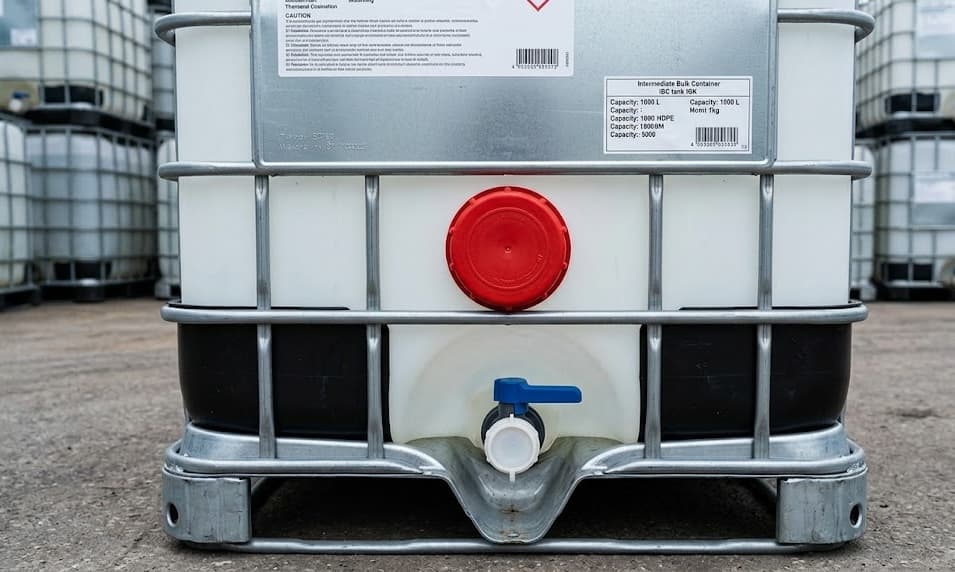
Frequently Asked Questions
Answers to the most common questions about IBC totes: buying, selling, recycling, cleaning, food safety, shipping, pricing, grades, and regulations.
We have compiled answers to the most common questions our customers ask about IBC totes, our services, and the buying and selling process. If you do not find your answer here, feel free to contact us directly at our Hebron, KY facility (1405 Worldwide Blvd, Hebron, KY 41048).
General IBC Questions
What is an IBC tote?+
What sizes of IBCs do you carry?+
How long do IBC totes last?+
What is the difference between a tote and an IBC?+
Buying IBCs
How much do IBC totes cost?+
What is the difference between new, reconditioned, and used IBCs?+
What does "food-grade" mean for an IBC?+
Can I visit your facility to inspect IBCs before buying?+
Selling Your IBCs
Do you buy used IBC totes?+
Do you offer pickup services?+
Cleaning & Recycling
How are IBCs cleaned and reconditioned?+
Can all IBCs be recycled?+
What happens to an IBC that previously held hazardous materials?+
Shipping & Logistics
How many IBCs fit on a truck?+
Do you deliver IBCs?+
Regulations & Safety
What UN/DOT regulations apply to IBC totes?+
Are your reconditioned IBCs safe for food storage?+
Can I use an IBC for drinking water storage?+
Pricing & Orders
How is IBC pricing determined?+
What are your typical lead times?+
Is there a minimum order quantity?+
International Shipping & Customs
Do you ship IBCs internationally?+
What customs documentation is needed for importing/exporting IBCs?+
Warranty & Insurance
Do IBCs come with a warranty?+
What insurance do I need for storing and transporting IBCs?+
Food Safety, Stacking & Disposal
How do I verify that an IBC is truly food-grade?+
How many IBCs can I safely stack?+
How do I properly dispose of an IBC at end of life?+
Pro Tip: Keep a Container Log
Maintaining a detailed container tracking log is one of the best practices you can adopt for IBC management. For each container, record the serial number (stamped on the UN marking plate), the date received, the source (seller), the previous contents, the date placed in service, what you fill it with, cleaning dates, inspection dates, and any repairs performed. This log will help you stay compliant with DOT periodic inspection requirements, support FDA traceability mandates for food-grade containers, and enable you to make data-driven decisions about when to retire containers. Many companies use a simple spreadsheet, but barcode or QR code scanning systems integrated with inventory management software are available for operations handling 100+ IBCs.
Still Have Questions?
Our team is happy to answer any questions not covered here. Reach out by phone, email, or visit us at our Hebron, KY facility for personalized assistance.